
ACN Advance: Provider Newsletter
September 2023
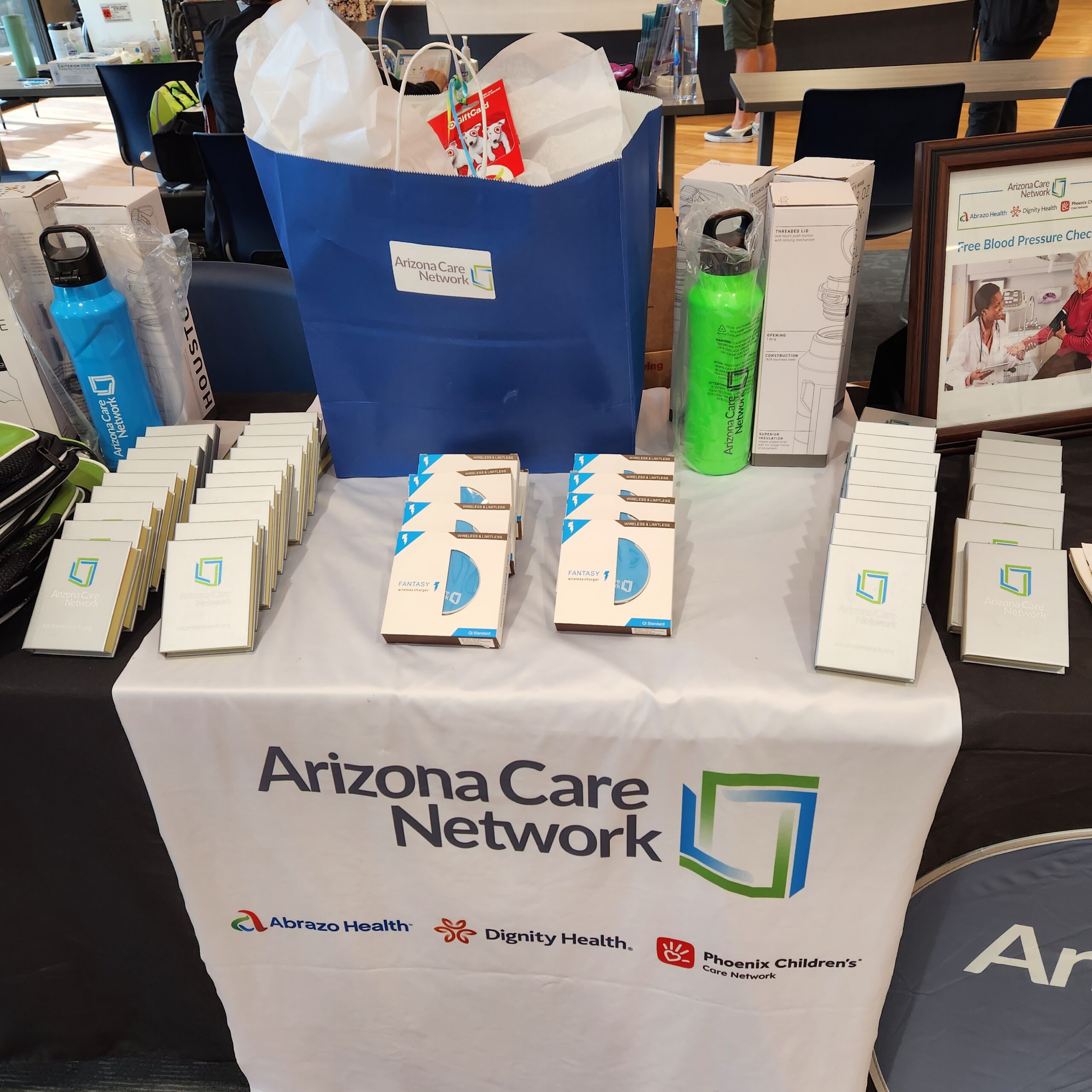
Dozens Receive Mammogram Screenings at Community Health Fairs
More than 60 members received no- or reduced- cost mammograms during ACN’s three Community Health Fairs in West Phoenix, Goodyear, and Mesa during the month of September.
In partnership with Adelante Healthcare, SimonMed, and Alignment Health, the Community Health Fairs were offered to members covered under ACN’s various payer arrangements, including Mercy Care, but were also open to the public. Members reserved a screening day/time through a link shared by email and on ACN’s Facebook page.
ACN-participating providers, along with the Care Coordination team and ACN’s population health pharmacist, were on-site to answer any member questions. Games, a food truck, blood pressure screening, free giveaways, and other health resource documents were also available.
Thank you to everyone who participated and stay tuned for possible future community health fairs in 2024.


Board of Managers Accepting 2024 Nominations Through Nov. 1
Arizona Care Network’s physician-led Board of Managers is accepting nominations through Nov. 1, 2023, for three-year terms beginning in 2024.
Board meetings are conducted at ACN’s office in Phoenix unless a virtual meeting is deemed more appropriate. Meetings are held at 6 p.m. on the first Thursday of alternate months beginning in April (April, June, August, October, and December).
A stipend for participation is offered. Additional information on Board member roles and responsibilities is available here.
If you or a participating physician would like to be considered by the Nominating Committee, please download and submit a nomination form via email governance@azcarenetwork.org by Nov. 1, 2023.

Updated HEDIS Measures for 2024
To improve its quality measurement and reporting, the National Committee for Quality Assurance (NCQA) is revising and retiring a few HEDIS measures for the 2024 measurement year.
Ultimately, HEDIS retired four measures, updated diabetes measures and made smaller changes across multiple measures. The NCQA also continues the transition to Electronic Clinical Data Systems (ECDS) reporting.
Changes to Existing HEDIS Measures
- Colorectal Cancer Screening. The ages for the Colorectal Cancer Screening measure was updated in HEDIS Measurement Year 2022 to align with the updates to the US Preventive Services Task Force (USPSTF) guidelines to assess adults ages 45-75.
- Hemoglobin A1c Control for Patients with Diabetes is renamed as Glycemic Status Assessment for Patients with Diabetes.
- Seven measures used to identify individuals with diabetes have simplified specifications.
- To mitigate inclusion of people taking a diabetes-related medication for non-diabetic purposes (ie. weight loss), a new diabetes diagnosis requirement is being added to the pharmacy method.
- Race/Ethnicity Stratification. This stratification is added to nine (9) HEDIS measures
- Gender Affirming Approaches to Measurement. The NCQA expanded the Breast Cancer Screening and Cervical Cancer Screening measures to include transgender members recommended for routine breast and cervical cancer screening.
ECDS Reporting
- NCQA retired administrative and hybrid reporting methods for:
- Colorectal Cancer Screening
- Follow-Up Care for Children Prescribed ADHD Medication
- Metabolic Monitoring for Children and Adolescents on Antipsychotics
Only the ECDS reporting method will be used for these measures.
Retired Measures
- Non-Recommended Cervical Cancer Screening in Adolescent Females
- Ambulatory Care and Inpatient Utilization—General Hospital/Acute Care.
- Use of Spirometry Testing in the Assessment and Diagnosis of COPD (not common)
View the full HEDIS technical specifications for more information.
Please contact your Clinical Performance Consultant or email practicetrasnsformation@azcarenetwork.org with any questions about HEDIS and quality measures.

New Covid-19, RSV, Flu Booster Vaccines Available This Fall
Three new vaccines are available to your patients this fall: a COVID-19 booster, a respiratory syncytial virus (RSV) vaccine, and updated flu shots.
The CDC recommends anyone age 6 months or older receive a COVID-19 vaccine if they previously have not or receive the updated COVID-19 booster from either Pfizer or Moderna.
With approximately six months of peak effectiveness, the CDC recommends patients receive booster vaccines in late October, a few weeks before peak season for COVID and flu begins in November. The CDC also recommends eligible patient receive the RSV vaccine two weeks after the flu/COVID vaccines.
The CDC also says these vaccines are available at no-cost to most patients with health insurance. Those without insurance may be eligible for free vaccinations through local pharmacies, or local health centers that participate in the Bridge Access Program.
Need additional support? ACN’s Care Coordination team can help your patients schedule any vaccine or booster appointments. Call (602) 406-7226 or email carecoordination@azcarenetwork.org for additional patient support.

ACN adds Community & State Members to Partnership with UnitedHealthcare
Earlier this summer, ACN expanded its partnership with UnitedHealthcare, adding a new value-based arrangement that offers practices in the network additional incentive opportunities for patients covered under UHC Community & State (C&S) Medicaid plan.
This addition of C&S to ACN’s portfolio of value-based arrangements creates an opportunity for primary care practices to include their C&S members in the 2024 Provider Rewards Program (PRP), while providing further opportunities to increase member attribution for primary care and specialist practices.
PRP-eligible practices may participate with both Mercy Care and UHC’s C&S programs simultaneously to further increase your practice’s incentive opportunities.
Please contact your Clinical Performance Consultant or email practicetransformation@azcarenetwork.org by mid-October to learn more about this opportunity and ask any questions.

Abrazo, USPI Facilities Now In-Network for Medica Members
Earlier this summer, all Abrazo Health and United Surgical Partners International (USPI) facilities became in-network options for Medica (Pinnacle) members.
This network expansion provides more than 50 additional locations throughout the Valley.
Previously, only Dignity Health, Valleywise Health, and Phoenix Children’s Care Network were considered in-network for Medica (Pinnacle) members.
Providers and members may now locate Abrazo and USPI locations within ACN’s Find-a-Provider website tool, along with all other ACN-participant practices and facilities. Your practice may also call ACN’s Concierge Team at (602) 406-7226 to confirm a medical group’s network status.
Please contact your Clinical Performance Consultants or email practicetransformation@azcarenetwork.org to receive any Quality measure tip sheet or with questions.

Screening Season: Cervical Cancer, Chlamydia Checkups
As chlamydia and other sexually transmitted diseases continue to increase among women in the United States, preventative screening is crucial toward early detection and treatment, especially for sexually active women in their teens through mid-20s.
For women ages 21-65, cervical cancer screening is a simple and important first step toward prevention, of, if necessary, treatment. And it can begin with asking patients a simple question: “Have you recently been sexually active?”
These screenings among your female patient population not only close important quality gaps, but can save time, medical costs, and even lives.
Cervical Cancer tip sheet (.PDF)
Chlamydia Screening tip sheet (.PDF)
Additional 1-page tip sheets are available to your practice for a wide variety of wellness and preventative care situations, including:
- Breast cancer screening
- Colorectal cancer screening
- Depression
- Diabetes/A1c
- Immunizations
- Medication adherence
- Opioids
- SDOH
- Tobacco screening, and more
Need support? ACN can help patients schedule a chlamydia or cervical cancer screening with your practice by calling
(602) 406-7226 or email members@azcarenetwork.org.
Please contact your Clinical Performance Consultant or email practicetransformation@azcarenetwork.org to receive any
1-page tip sheets.

100-Day Prescription Supply Available Through Most Payors
Tannaz Farahani, PharmD, MPH
Manager, Population Health Pharmacy
Arizona Care Network
As of Jan. 1, 2022, several Payors (Aetna, Optum, UHC, et al.) increased the maximum day supply of certain medications from 90 to 100 days.
There are some important caveats related to this recent benefit increase:
- 100-day dispensing typically applies to medications on formulary Tiers 1, 2, 3, and 4,
- 100-day supply can be utilized at both local and mail order pharmacies,
- Arizona law allows combining of refills up to 100-day supply.
- If a member uses mail order, a new 100-day supply prescriptions for maintenance medications MUST be written.
- Member Value: Copays for 100-day supply are often the same price as copays for a 90-day supply.
- Convenience: Fewer trips to the pharmacy, and
- Providers may assist members to stay adherent with their long-term medications.
A best practice for these situations could be to write a new 100-day supply prescription for maintenance medications for all patients. If they are not approved, they will be added to patient’s profile as additional refills.
Not all medications can be dispensed as a 100-day supply:
1. Unbreakable packages such as inhalers, vials, or tubes, etc. – some medications may be limited by State and Federal Quantity Limitations
2. Specialty-tier medications (ie. Tier 5 medications continue to be a maximum 30-day supply),
3. Short-term medications – Antibiotics, Pain Medications, etc.
4. Extended day supply may not be appropriate.
If a member continues to fill a 90-day supply, the claims will continue to adjudicate normally.
Providers and patients can contact the dispensing pharmacy with any questions or to confirm a medication’s maximum daily supply allowance.

Arizona’s Interchangeable Biosimilar Laws for Prescribing Medications
Tannaz Farahani, PharmD, MPH
Manager, Population Health Pharmacy
Arizona Care Network
Pharmacy laws and practices vary from state to state, particularly when it comes to managing interchangeable biosimilars.
In Arizona, if the medical provider who prescribes the biologic does not indicate an intent to prevent substitution, then substitution would be allowed by the dispensing pharmacist.
“Interchangeable biological product” means a biological product that either:
- The FDA has licensed and determined meets the safety standards for determining interchangeability; or
- Is determined to be therapeutically equivalent as set forth in the latest edition of the supplement to the FDA’s approved drug products with therapeutic equivalence evaluations.
A pharmacist in Arizona may substitute a biological product for a prescribed biological product only if all the following conditions are met:
- The FDA has determined the substituted product to be an interchangeable biological product.
- The prescribing physician does not indicate that substitution is prohibited.
- The pharmacy informs the patient or person presenting the prescription of the substitution in advance.
Within five (5) business days after dispensing a biological product, the dispensing pharmacist:
- Makes an entry of the specific product provided, including the name of the product and the manufacturer.
- The communication shall be conveyed by making an entry that is electronically accessible to the prescriber through:
- Electronic medical records system
- An electronic prescribing technology
- Pharmacy benefit management system
- Pharmacy record via fax, telephone, electronic transmission, or other prevailing means
- The pharmacist retains a record of the biological product dispensed.
The Purple Book
With “biosimilars” doing well and a wave of biosimilar products arriving into the U.S. market constantly, it is important to know where and how to access reliable information to aid in the decision making when prescribing the right biosimilar. For example, this year alone the U.S. market will potentially see as many as 10 adalimumab biosimilars (Humira).
The FDA has a searchable online database called the Purple Book, which is a dedicated list of licensed biological products, biosimilar and interchangeable biological products, licensed and approved by the FDA under the Public Health Service Act.
Visit the FDA’s Purple Book Database

Network News Roundup
- Follow us on Facebook, Twitter, and LinkedIn for additional news, health-related content for providers and patients, organizational updates, and more.
- Learn more about ACN’s Care Coordination program and services designed to partner and support your practice in achieving healthy, cost-effective patient outcomes in this video.
- ACN’s improved Specialist Performance Reports and Medical Neighborhood Maps are available to your practice anytime. Additionally, Physical Therapy and Radiology listings quick reference guides are also available. Contact your Clinical Performance Consultant or email practicetransformation@azcarenetwork.org to receive any of these reports and/or maps, all of which are updated quarterly.
- A 1-page Payer ID Card Quick Reference document is available from your Clinical Performance Consultant. This document contains samples of ID Cards from ACN payer partners, as well as contact information. Contact your CPC or email practicetransformation@azcarenetwork.org if your practice would like copies of this document.
- Quality measure tip sheets are available from your Clinical Performance Consultant, including colorectal cancer screening, depression screening and follow-up, diabetes (A1C, Eye Exam, Nephropathy), Social Determinants of Health (SDOH), and Tobacco screening. These 1-page tip sheets (.PDF) include best practices, documentation requirements, and codes for your practice to help close quality gaps. Contact your Clinical Performance Consultant or email practicetransformation@azcarenetwork.org to receive any or all tip sheets.
- ACN’s Oct. 4 Practice Manager Forum from 12:15-1 p.m. features Alignment Health’s 2024 member benefit updates, plan information and clinical information. The monthly forum is open to all ACN providers and/or staff. Additionally, Alignment Health is adding two new products this fall to its Arizona portfolio: a) a Part B premium rebate plan, and b) a C-SNP product geared for patients who are dual-eligible (AHCCCS/Medicare). Join the webinar here, or contact your Clinical Performance Consultant or email practicetransformation@azcarenetwork.org to receive a link to the Forum.
- Dignity Health is hosting Innovations in Breast Cancer Symposium on Oct. 13, from 12-5 p.m. at the Marriott Phoenix Chandler hotel. CME opportunities, lunch, and happy hour are included. Led by Emily Ho, MD and John David, MD, the event features panel discussions highlighting multidisciplinary teams of experts, including the latest in A.I. technology towards the diagnosis and treatment in breast cancer patients. RSVP and more information is available here.
- Abrazo Scottsdale Campus is hosting Grand Rounds and Case Presentations on surgical robotics on Saturday, Oct. 28, from 9-10 a.m. Case reviews will be based on utilizing robots and how it affects positive outcomes on complex patients. Groups of physicians will rotate through five stations for 10-minute case presentations. RSVP to Sarah.Brue@tenethealth.com for more information.
- Dignity Health is hosting Lung Cancer: Screening, Advanced Diagnostics, and Treatment symposium on Friday, Nov. 17, from Noon-4:30 p.m. at the Marriott Phoenix Chandler. Learn the latest in lung cancer screening, advanced diagnostics, and treatment for lung cancer – including an interactive experience with robotic surgical technology, navigational bronchoscopy, and a computerized chest drainage system. CME credits are available, and lunch and happy hour is included. RSVP or more information is available here.
- Abrazo Health is partnering with the American Heart Association for a West Valley Heart Walk on Saturday, Dec. 2, at Goodyear Civic Square. Registration is free and participants can start a team, join a team, or join as an individual. The West Valley Heart Walk features a 3-mile walk and a 1-mile survivor miracle mile. The event opens at 9 a.m. and the walk will start at 10 a.m. Health activities and entertainment will continue after walkers complete their exercise. Registration and more information is available here.
- Abrazo Arizona Heart Hospital has a dedicated has a dedicated Cardiogenic Shock telephone line that is available 24/7 for patient consults or transfer requests. A call to the Cardiogenic Shock line directly connects specialists from interventional cardiology, cardiovascular surgery, and the intensivist team to focus on real-time, shared decision-making care to develop the patient’s plan of care and transfer pathway to improve patient survival and outcomes. For more information, call 1-844-ACHHCSP or 1-844-294-4277.
- Phoenix Children’s opened its new Emergency Department in Avondale this summer. The 35,000 square-foot space will provide 24/7 emergency care, 40 treatment rooms, 24/7 onsite laboratory services and around-the-clock imaging including ultrasound, computerized tomography, fluoroscopy, and digital radiography.
- Phoenix Children’s Hospital began construction on a new 44,000-square-foot Level IV neonatal ICU on the 11th floor of its Central Phoenix campus. The new unit includes 48 private rooms with a crib, window and private bathroom, sleeper couches for parents and caregivers, patient rooms equipped for emergency and advanced treatments, right at the bedside, a multipurpose room for physical and occupational therapy, a washer, dryer, refrigerator and sink for patient family use, and a family lounge and quiet areas for parents. The new unit is scheduled to open in 2024.

Welcome, New Provider Organizations!
- Arizona Primary Care Partners
- Samuel Kim, MD
- Leading MD’s
- Modern Physical Therapy and Sports Medicine
- Peak Surgery Center of Avondale
- Phoenix Heart Ambulatory Surgery Center and Electrophysiology
- Sonoran Endoscopy Center
- Surgical Group of Arizona
- The Limb Center
- Yakoby Internal Medicine
You can also view a list of provider organizations no longer participating with ACN.