Jason Kwan, PharmD
Population Health Pharmacist, Arizona Care Network
More than 30 million adults in the United States may have chronic kidney disease (CKD) and CKD disease is typically progressive, which means it gets worse over time.2 The earlier it is managed, the longer your kidneys can be protected, which can prevent kidney failure. Identifying and treating CKD early is key to keeping your kidneys healthy.
Since many individuals do not experience symptoms in the early stages of chronic kidney disease, it is important for you to be mindful of all symptoms and know your risk-level of developing CKD. Diabetes and high blood pressure are two of the most common causes of CKD, but there are also other causes including infection, genetics, and more.2 Just because you have diabetes or high blood pressure does not mean you will develop CKD.
Symptoms of CKD
As chronic kidney disease gets worse, an individual may experience the following symptoms2:
- Chest pain
- Dry skin
- Itching or numbness
- Feeling tired
- Headaches
- Increased or decreased urination
- Loss of appetite
- Muscle cramps
- Nausea
- Shortness of breath
- Sleep problems
- Trouble concentrating
- Vomiting
- Weight loss
If you or a loved one are experiencing any of these symptoms, be sure to seek care early and discuss any concerns with a healthcare provider.
What Causes CKD?
CKD is a result of damaged kidneys that are unable to filter blood well. Waste builds up and can lead to damage to your body over time. There are five stages of chronic kidney disease and the primary way to measure kidney function is by measuring glomerular filtration rate (GFR). A lower GFR indicates poorer kidney function.
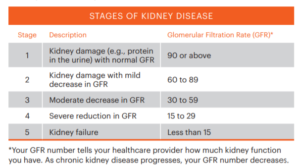
If you or a loved one has been diagnosed with chronic kidney disease, a health care provider will help determine the stage of CKD you are dealing with.1 The map (left) from the National Kidney Foundation gives you a broad picture of what the different stages typically look like in relation to your GFR measurement.
Always remember the sooner you know you have CKD, the sooner you can make changes to protect yourself. If you are a member of Arizona Care Network and you are experiencing any of the symptoms that were listed above, talk to your primary care doctor. You and your doctor can use the ‘Find a Doc’ tool on our website to discuss options for an in-network nephrologist near you if your doctor thinks it’s necessary.
Need help scheduling an appointment?
Contact our concierge 24/7 by calling 602.406.7226 or emailing members@azcarenetwork.org. Our team is more than happy to help you.
For more information on chronic kidney disease, check out the valuable resources below:
- About Chronic Kidney Disease: A Guide for Patients. National Kidney Foundation. Retrieved from https://www.kidney.org/sites/default/files/11-50-0160_patientguideCKD.pdf
- What is Chronic Kidney Disease? (2017). National Institute of Diabetes and Digestive and Kidney Diseases. Retrieved from https://www.niddk.nih.gov/health-information/kidney-disease/chronic-kidney-disease-ckd/what-is-chronic-kidney-disease#symptoms